Close
Members' shelf
All 9 nodes on Naming & Classification are for members only.
Pay with the email you sign in with here, so the Pass is linked to this account.
Close
Members' shelf
All 16 nodes on System Protection & Threat Modeling are for members only.
Pay with the email you sign in with here, so the Pass is linked to this account.
Human-Automation Interaction
- № 2026.10 · 01Function allocationFitts list (MABA-MABA)Fitts (1951)
- № 2026.10 · 01Ironies of automationBainbridge (1983)Lab cases ×1
- № 2026.10 · 01Levels of automationSheridan & Verplank (1978) · Parasuraman, Sheridan & Wickens (2000)Lab cases ×2
- № 2026.10 · 01Vigilance decrementMackworth (1948)Lab cases ×3
- № 2026.10 · 01Automation complacency and biasParasuraman & Manzey (2010)Lab cases ×2
- № 2026.10 · 01Out-of-the-loop performance problemEndsley & Kiris (1995)
- № 2026.10 · 01Situation awarenessEndsley (1995)Lab cases ×2
- № 2026.10 · 01Mental workload (NASA-TLX)Hart & Staveland (1988)Lab cases ×1
- № 2026.10 · 01Trust in automationLee & See (2004)
- № 2026.10 · 01Use, misuse, disuse, abuseParasuraman & Riley (1997)Lab cases ×1
- № 2026.10 · 01Adaptive automationScerbo (1996)Lab cases ×2
Personal Knowledge Management
- № 2026.10 · 02MemexBush (1945)
- № 2026.10 · 02Hypertext and transclusionNelson (1965)
- № 2026.10 · 02ZettelkastenLuhmann (1981)Lab cases ×3
- № 2026.10 · 02Cornell note-taking systemPauk (1962)
- № 2026.10 · 02Evergreen notesMatuschakLab cases ×2
- № 2026.10 · 02PARA methodForte (2022)Lab cases ×3
- № 2026.10 · 02CODE methodForte (2022)Lab cases ×1
- № 2026.10 · 02Personal kanbanBenson & Barry (2011)Lab cases ×2
- № 2026.10 · 02DiátaxisProcida
- № 2026.10 · 02LYT and maps of contentLYT / Map of ContentMilo (2020)Lab cases ×2
- № 2026.10 · 02Personal information managementBergman & Whittaker (2016)
- № 2026.10 · 02Stage-based model of personal informaticsLi, Dey & Forlizzi (2010)
Information Theory
- № 2026.11 · 01Information and uncertaintyShannon (1948) / Hartley (1928)
- № 2026.11 · 01Self-informationShannon (1948) / Samson (1951)
- № 2026.11 · 01EntropyShannon (1948)
- № 2026.11 · 01Signal and noiseShannon (1948)Lab cases ×2
- № 2026.11 · 01Channel and capacityShannon (1948, 1949)Lab cases ×2
- № 2026.11 · 01Coding and compressionShannon (1948) / Fano (1949) / Huffman (1952)Lab cases ×2
- № 2026.11 · 01Rate-distortion theoryShannon (1959) / Berger (1971)
- № 2026.11 · 01Algorithmic information theorySolomonoff (1964) / Kolmogorov (1965) / Chaitin (1966)
- № 2026.11 · 01Mutual informationShannon (1948) / Fano (1961)
- № 2026.11 · 01Kullback-Leibler divergenceKullback & Leibler (1951)
- № 2026.11 · 01Information theory and cognitive scienceMiller (1956) / Bartlett (1932) / Simon (1955)
- № 2026.11 · 01Information theory and thermodynamicsSzilárd (1929) / Landauer (1961) / Bennett (1973)Lab cases ×2
Software & Systems Architecture
- № 2026.11 · 02Don't repeat yourself (DRY)Hunt & Thomas (1999)
- № 2026.11 · 02Single source of truth (concept history)Devlin & Murphy (1988) → Loshin (2008)Lab cases ×3
- № 2026.11 · 02Model-view-controller (MVC)Reenskaug (1979)
- № 2026.11 · 02Event sourcingFowler (2005)
- № 2026.11 · 02Command query responsibility segregation (CQRS)Young (2010) / Meyer CQS (1988)Lab cases ×2
- № 2026.11 · 02Modularity and thin crossing pointsBaldwin & Clark (2000) / Baldwin (2008)
- № 2026.11 · 02Domain-driven design (DDD)Evans (2003)
- № 2026.11 · 02Hexagonal architecture (ports and adapters)Cockburn (2005)
- № 2026.11 · 02Conway's lawConway (1968)Lab cases ×2
- № 2026.11 · 02Team topologiesSkelton & Pais (2019)
- № 2026.11 · 02MicroservicesLewis & Fowler (2014)
- № 2026.11 · 02CAP theoremBrewer (2000) / Gilbert & Lynch (2002)Lab cases ×2
- № 2026.11 · 02Data meshDehghani (2019, 2022)
- № 2026.11 · 02Retrieval-augmented generation (RAG)Lewis et al. (2020)
- № 2026.11 · 02Hallucination in NLGJi et al. (2023)
- № 2026.11 · 02Faithfulness vs factualityMaynez et al. (2020)
- № 2026.11 · 02Fabricated citationsWalters & Wilder (2023)
- Adaptive automationScerbo (1996)Lab cases ×2
- Algorithmic information theorySolomonoff (1964) / Kolmogorov (1965) / Chaitin (1966)
- Automation complacency and biasParasuraman & Manzey (2010)Lab cases ×2
- Personal information managementBergman & Whittaker (2016)
- CAP theoremBrewer (2000) / Gilbert & Lynch (2002)Lab cases ×2
- Channel and capacityShannon (1948, 1949)Lab cases ×2
- CODE methodForte (2022)Lab cases ×1
- Coding and compressionShannon (1948) / Fano (1949) / Huffman (1952)Lab cases ×2
- Conway's lawConway (1968)Lab cases ×2
- Cornell note-taking systemPauk (1962)
- Command query responsibility segregation (CQRS)Young (2010) / Meyer CQS (1988)Lab cases ×2
- Data meshDehghani (2019, 2022)
- DiátaxisProcida
- Domain-driven design (DDD)Evans (2003)
- Don't repeat yourself (DRY)Hunt & Thomas (1999)
- EntropyShannon (1948)
- Event sourcingFowler (2005)
- Evergreen notesMatuschakLab cases ×2
- Fabricated citationsWalters & Wilder (2023)
- Faithfulness vs factualityMaynez et al. (2020)
- Function allocationFitts list (MABA-MABA)Fitts (1951)
- Hexagonal architecture (ports and adapters)Cockburn (2005)
- Hypertext and transclusionNelson (1965)
- Information and uncertaintyShannon (1948) / Hartley (1928)
- Information theory and cognitive scienceMiller (1956) / Bartlett (1932) / Simon (1955)
- Information theory and thermodynamicsSzilárd (1929) / Landauer (1961) / Bennett (1973)Lab cases ×2
- Ironies of automationBainbridge (1983)Lab cases ×1
- Kullback-Leibler divergenceKullback & Leibler (1951)
- Levels of automationSheridan & Verplank (1978) · Parasuraman, Sheridan & Wickens (2000)Lab cases ×2
- Stage-based model of personal informaticsLi, Dey & Forlizzi (2010)
- Hallucination in NLGJi et al. (2023)
- LYT and maps of contentLYT / Map of ContentMilo (2020)Lab cases ×2
- MemexBush (1945)
- Mental workload (NASA-TLX)Hart & Staveland (1988)Lab cases ×1
- MicroservicesLewis & Fowler (2014)
- Modularity and thin crossing pointsBaldwin & Clark (2000) / Baldwin (2008)
- Mutual informationShannon (1948) / Fano (1961)
- Model-view-controller (MVC)Reenskaug (1979)
- Out-of-the-loop performance problemEndsley & Kiris (1995)
- PARA methodForte (2022)Lab cases ×3
- Personal kanbanBenson & Barry (2011)Lab cases ×2
- Rate-distortion theoryShannon (1959) / Berger (1971)
- Retrieval-augmented generation (RAG)Lewis et al. (2020)
- Self-informationShannon (1948) / Samson (1951)
- Signal and noiseShannon (1948)Lab cases ×2
- Single source of truth (concept history)Devlin & Murphy (1988) → Loshin (2008)Lab cases ×3
- Situation awarenessEndsley (1995)Lab cases ×2
- Team topologiesSkelton & Pais (2019)
- Trust in automationLee & See (2004)
- Use, misuse, disuse, abuseParasuraman & Riley (1997)Lab cases ×1
- Vigilance decrementMackworth (1948)Lab cases ×3
- ZettelkastenLuhmann (1981)Lab cases ×3
wrong.
- “Compression means deleting some of it”: wrong.→ Coding and compression
- “The more detail the better”: wrong.→ Evergreen notes
- “Zero correlation means no relationship”: wrong.→ Mutual information
- “The more they trust it, the better”: wrong.→ Trust in automation
not necessarily.
- “Hand the task to the AI and that is one job off my plate”: not necessarily.→ Function allocation
- “Wrap it in an interface and it is decoupled”: not necessarily.→ Hexagonal architecture (ports and adapters)
- “A map of content is a folder with a new name”: not necessarily.→ LYT and maps of content
- “Luhmann invented the slip box”: not necessarily.→ Zettelkasten
it is not that simple.
- “One pass through the four steps and you ship”: it is not that simple.→ CODE method
- “One document covering everything is fine”: it is not that simple.→ Diátaxis
- “A link is a link”: it is not that simple.→ Hypertext and transclusion
- “Automation is either on or off”: it is not that simple.→ Levels of automation
- “Cut along function and the boundary is a good one”: it is not that simple.→ Modularity and thin crossing points
it will not carry that.
- “A bit more progress and it will stop hallucinating”: it will not carry that.→ Hallucination in NLG
- “Filing by topic is enough”: it will not carry that.→ PARA method
the fault is structural.
- “Fewer tools is always better”: the fault is structural.→ Personal information management
- “Neat notes mean you will remember it”: the fault is structural.→ Cornell note-taking system
they are two different things.
- “Information is content”: they are two different things.→ Information and uncertainty
- “Collecting it means using it”: they are two different things.→ Stage-based model of personal informatics
- “The Memex is where hypertext begins”: they are two different things.→ Memex
- “The finer you slice it, the more decoupled it is”: they are two different things.→ Microservices
- “A kanban board is just a to-do list”: they are two different things.→ Personal kanban
that is a misreading.
- “Entropy is disorder”: that is a misreading.→ Entropy
- “The point of it is to give the data a single source of truth”: that is a misreading.→ Model-view-controller (MVC)
Scene
- In 2012 the original author wrote that the popular “two of three” formulation was always misleading.→ CAP theorem
- Twenty years on, the two authors added a sentence: the principle is about knowledge and intent.→ Don't repeat yourself (DRY)
- Lawyers used a generative tool to find precedents for a filing; several did not exist.→ Fabricated citations
- Retelling a story from an unfamiliar culture, subjects turned the details they did not understand into plausible ones.→ Information theory and cognitive science
- When the automation failed during the navigation task, the fully automated group took over worst.→ Out-of-the-loop performance problem
- On one question set, with the answer in no retrieved passage, just over one in ten was still answered right.→ Retrieval-augmented generation (RAG)
- Subjects watching a clock hand for the occasional double jump soon began to miss it.→ Vigilance decrement
Tradeoff
- Fix the division of labour at design time, or let it shift while the system runs?→ Adaptive automation
- Should reading and writing share one model, or be split into two along their boundary?→ Command query responsibility segregation (CQRS)
- Should data be managed centrally by one team, or held by each domain itself?→ Data mesh
- Draw the architecture first, or first get domain experts and developers using one set of terms?→ Domain-driven design (DDD)
- Design the human out, and the hardest leftover work still lands on the human.→ Ironies of automation
- Should the model cover every situation that occurs, or lock onto one peak?→ Kullback-Leibler divergence
- Workload cannot be seen, so people rate their own, yet one overall score hides where the load comes from.→ Mental workload (NASA-TLX)
- To compress an image, measure distortion by numerical difference, or by what the eye cares about?→ Rate-distortion theory
- Should the information in an event be counted with the insider's probabilities or the outsider's?→ Self-information
- Long-run structure or short-run response? Signal and noise swap sides depending on the answer.→ Signal and noise
- Should two teams explore together at high frequency, or should one offer a service the other helps itself to?→ Team topologies
Two things apart
- Hard to guess and hard to describe are two rulers that can give one string opposite readings.→ Algorithmic information theory
- Missing things while monitoring, deferring while deciding: two effects, both rooted in attention.→ Automation complacency and bias
- What fits into a channel and what can be reliably reconstructed under noise are two different quantities.→ Channel and capacity
- The lines on the org chart and the paths along which people actually talk are two different maps.→ Conway's law
- The record of changes and the current state: one is the fact, the other is computed from it.→ Event sourcing
- Being faithful to the source and being true of the world are two independent lines of judgement.→ Faithfulness vs factuality
- Computing and erasing data are separate entries in the thermodynamic account; the lower bound falls on erasing.→ Information theory and thermodynamics
- “Single version of the truth” concedes other versions exist; “only one place” does not.→ Single source of truth (concept history)
- Seeing the situation and deciding what to do are two abilities; the first is only the input to the second.→ Situation awareness
- Over-reliance and refusal to use have independent causes.→ Use, misuse, disuse, abuse
B
- Bainbridge 1 volume № 2026.10 · 01
- Ironies of automationBainbridge (1983)Lab cases ×1
- Baldwin 1 volume № 2026.11 · 02
- Modularity and thin crossing pointsBaldwin & Clark (2000) / Baldwin (2008)
- Barry 1 volume № 2026.10 · 02
- Personal kanbanBenson & Barry (2011)Lab cases ×2
- Bartlett 1 volume № 2026.11 · 01
- Information theory and cognitive scienceMiller (1956) / Bartlett (1932) / Simon (1955)
- Bennett 1 volume № 2026.11 · 01
- Information theory and thermodynamicsSzilárd (1929) / Landauer (1961) / Bennett (1973)Lab cases ×2
- Benson 1 volume № 2026.10 · 02
- Personal kanbanBenson & Barry (2011)Lab cases ×2
- Berger 1 volume № 2026.11 · 01
- Rate-distortion theoryShannon (1959) / Berger (1971)
- Bergman 1 volume № 2026.10 · 02
- Personal information managementBergman & Whittaker (2016)
- Brewer Brewer, E. 1 volume № 2026.11 · 02
- CAP theoremBrewer (2000) / Gilbert & Lynch (2002)Lab cases ×2
- Bush 1 volume № 2026.10 · 02
- MemexBush (1945)
C
- Chaitin 1 volume № 2026.11 · 01
- Algorithmic information theorySolomonoff (1964) / Kolmogorov (1965) / Chaitin (1966)
- Clark 1 volume № 2026.11 · 02
- Modularity and thin crossing pointsBaldwin & Clark (2000) / Baldwin (2008)
- Cockburn 1 volume № 2026.11 · 02
- Hexagonal architecture (ports and adapters)Cockburn (2005)
- Conway 1 volume № 2026.11 · 02
- Conway's lawConway (1968)Lab cases ×2
D
- Dehghani 1 volume № 2026.11 · 02
- Data meshDehghani (2019, 2022)
- Devlin 1 volume № 2026.11 · 02
- Single source of truth (concept history)Devlin & Murphy (1988) → Loshin (2008)Lab cases ×3
- Dey 1 volume № 2026.10 · 02
- Stage-based model of personal informaticsLi, Dey & Forlizzi (2010)
E
 Endsley 2 volumes № 2026.10 · 01Portrait: Official portrait, U.S. Air Force. Public domain (work of the U.S. federal government), via Wikimedia Commons. (cropped)
- Situation awarenessEndsley (1995)Lab cases ×2
- Out-of-the-loop performance problemEndsley & Kiris (1995)
- Evans 1 volume № 2026.11 · 02
- Domain-driven design (DDD)Evans (2003)

F
- Fano 2 volumes № 2026.11 · 01
- Coding and compressionShannon (1948) / Fano (1949) / Huffman (1952)Lab cases ×2
- Mutual informationShannon (1948) / Fano (1961)
- Fitts 1 volume № 2026.10 · 01
- Function allocationFitts list (MABA-MABA)Fitts (1951)
- Forlizzi 1 volume № 2026.10 · 02
- Stage-based model of personal informaticsLi, Dey & Forlizzi (2010)
- Forte 2 volumes № 2026.10 · 02
- PARA methodForte (2022)Lab cases ×3
- CODE methodForte (2022)Lab cases ×1
- Fowler 2 volumes № 2026.11 · 02
- Event sourcingFowler (2005)
- MicroservicesLewis & Fowler (2014)
G
- Gilbert 1 volume № 2026.11 · 02
- CAP theoremBrewer (2000) / Gilbert & Lynch (2002)Lab cases ×2
H
- Hart 1 volume № 2026.10 · 01
- Mental workload (NASA-TLX)Hart & Staveland (1988)Lab cases ×1
- Hartley 1 volume № 2026.11 · 01
- Information and uncertaintyShannon (1948) / Hartley (1928)
- Huffman 1 volume № 2026.11 · 01
- Coding and compressionShannon (1948) / Fano (1949) / Huffman (1952)Lab cases ×2
- Hunt 1 volume № 2026.11 · 02
- Don't repeat yourself (DRY)Hunt & Thomas (1999)
J
- Ji 1 volume № 2026.11 · 02
- Hallucination in NLGJi et al. (2023)
K
- Kiris 1 volume № 2026.10 · 01
- Out-of-the-loop performance problemEndsley & Kiris (1995)
- Kolmogorov 1 volume № 2026.11 · 01
- Algorithmic information theorySolomonoff (1964) / Kolmogorov (1965) / Chaitin (1966)
- Kullback 1 volume № 2026.11 · 01
- Kullback-Leibler divergenceKullback & Leibler (1951)
L
- Landauer 1 volume № 2026.11 · 01
- Information theory and thermodynamicsSzilárd (1929) / Landauer (1961) / Bennett (1973)Lab cases ×2
- Lee 1 volume № 2026.10 · 01
- Trust in automationLee & See (2004)
- Leibler 1 volume № 2026.11 · 01
- Kullback-Leibler divergenceKullback & Leibler (1951)
- Lewis Lewis, J. 1 volume № 2026.11 · 02
- MicroservicesLewis & Fowler (2014)
- Lewis Lewis, P. 1 volume № 2026.11 · 02
- Retrieval-augmented generation (RAG)Lewis et al. (2020)
- Li 1 volume № 2026.10 · 02
- Stage-based model of personal informaticsLi, Dey & Forlizzi (2010)
- Loshin 1 volume № 2026.11 · 02
- Single source of truth (concept history)Devlin & Murphy (1988) → Loshin (2008)Lab cases ×3
 Luhmann 1 volume № 2026.10 · 02Portrait: Photo: Pressestelle HSG, 1989. Universitätsarchiv St.Gallen (HSG), HSGH 022-000941. Via Wikimedia Commons, CC BY-SA 4.0. (cropped)
- ZettelkastenLuhmann (1981)Lab cases ×3
- Lynch 1 volume № 2026.11 · 02
- CAP theoremBrewer (2000) / Gilbert & Lynch (2002)Lab cases ×2

M
- Mackworth 1 volume № 2026.10 · 01
- Vigilance decrementMackworth (1948)Lab cases ×3
- Manzey 1 volume № 2026.10 · 01
- Automation complacency and biasParasuraman & Manzey (2010)Lab cases ×2
- Matuschak 1 volume № 2026.10 · 02
- Evergreen notesMatuschakLab cases ×2
- Maynez 1 volume № 2026.11 · 02
- Faithfulness vs factualityMaynez et al. (2020)
- Meyer 1 volume № 2026.11 · 02
- Command query responsibility segregation (CQRS)Young (2010) / Meyer CQS (1988)Lab cases ×2
- Miller Miller, G. 1 volume № 2026.11 · 01
- Information theory and cognitive scienceMiller (1956) / Bartlett (1932) / Simon (1955)
- Milo 1 volume № 2026.10 · 02
- LYT and maps of contentLYT / Map of ContentMilo (2020)Lab cases ×2
- Murphy 1 volume № 2026.11 · 02
- Single source of truth (concept history)Devlin & Murphy (1988) → Loshin (2008)Lab cases ×3
N
- Nelson 1 volume № 2026.10 · 02
- Hypertext and transclusionNelson (1965)
P
- Pais 1 volume № 2026.11 · 02
- Team topologiesSkelton & Pais (2019)
- Parasuraman 3 volumes № 2026.10 · 01Psychologist and human factors researcher (1950 to 2015); Professor of Psychology at The Catholic University of America from 1982 to 2004, then University Professor at George Mason University from 2004, directing its Human Factors and Applied Cognition program.Co-author of three volumes spanning two segments of the shelf: task allocation (the 2000 levels model with Sheridan and Wickens) and trust and reliance (the 1997 use, misuse, disuse, abuse taxonomy; the 2010 complacency and bias account). Read together, they run from automation not being a switch to attention withdrawing.Start with: Levels of automation ▸
- Levels of automationSheridan & Verplank (1978) · Parasuraman, Sheridan & Wickens (2000)Lab cases ×2
- Automation complacency and biasParasuraman & Manzey (2010)Lab cases ×2
- Use, misuse, disuse, abuseParasuraman & Riley (1997)Lab cases ×1
- Pauk 1 volume № 2026.10 · 02
- Cornell note-taking systemPauk (1962)
- Procida 1 volume № 2026.10 · 02
- DiátaxisProcida
R
- Reenskaug 1 volume № 2026.11 · 02
- Model-view-controller (MVC)Reenskaug (1979)
- Riley 1 volume № 2026.10 · 01
- Use, misuse, disuse, abuseParasuraman & Riley (1997)Lab cases ×1
S
- Samson 1 volume № 2026.11 · 01
- Self-informationShannon (1948) / Samson (1951)
- Scerbo 1 volume № 2026.10 · 01
- Adaptive automationScerbo (1996)Lab cases ×2
- See 1 volume № 2026.10 · 01
- Trust in automationLee & See (2004)
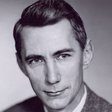 Shannon 8 volumes № 2026.11 · 01Portrait: Photo: unknown photographer. Tekniska museet (Sweden), item 43069, via Flickr. Via Wikimedia Commons, CC BY 2.0. (cropped)American electrical engineer (1916 to 2001); at Bell Laboratories from 1941 to 1972, later a longtime professor of electrical engineering at MIT.Common source of all eight volumes on the Information Theory shelf. One 1948 paper set out entropy, channel capacity and coding at once, the capacity formula under noise included; 1949 gave it a geometric proof, and 1959 added the rate-distortion theory. From there, follow the shelf order.Often misattributed: The capacity formula is often credited to Hartley 1928; the 1928 result counts distinguishable states without noise. See the errata on Information and uncertainty.Start with: Information and uncertainty ▸
- Information and uncertaintyShannon (1948) / Hartley (1928)
- Self-informationShannon (1948) / Samson (1951)
- EntropyShannon (1948)
- Signal and noiseShannon (1948)Lab cases ×2
- Channel and capacityShannon (1948, 1949)Lab cases ×2
- Coding and compressionShannon (1948) / Fano (1949) / Huffman (1952)Lab cases ×2
- Rate-distortion theoryShannon (1959) / Berger (1971)
- Mutual informationShannon (1948) / Fano (1961)
- Sheridan 1 volume № 2026.10 · 01
- Levels of automationSheridan & Verplank (1978) · Parasuraman, Sheridan & Wickens (2000)Lab cases ×2
- Simon 1 volume № 2026.11 · 01
- Information theory and cognitive scienceMiller (1956) / Bartlett (1932) / Simon (1955)
- Skelton 1 volume № 2026.11 · 02
- Team topologiesSkelton & Pais (2019)
- Solomonoff 1 volume № 2026.11 · 01
- Algorithmic information theorySolomonoff (1964) / Kolmogorov (1965) / Chaitin (1966)
- Staveland 1 volume № 2026.10 · 01
- Mental workload (NASA-TLX)Hart & Staveland (1988)Lab cases ×1
- Szilárd 1 volume № 2026.11 · 01
- Information theory and thermodynamicsSzilárd (1929) / Landauer (1961) / Bennett (1973)Lab cases ×2

T
- Thomas 1 volume № 2026.11 · 02
- Don't repeat yourself (DRY)Hunt & Thomas (1999)
V
- Verplank 1 volume № 2026.10 · 01
- Levels of automationSheridan & Verplank (1978) · Parasuraman, Sheridan & Wickens (2000)Lab cases ×2
W
- Walters 1 volume № 2026.11 · 02
- Fabricated citationsWalters & Wilder (2023)
- Whittaker 1 volume № 2026.10 · 02
- Personal information managementBergman & Whittaker (2016)
- Wickens 1 volume № 2026.10 · 01
- Levels of automationSheridan & Verplank (1978) · Parasuraman, Sheridan & Wickens (2000)Lab cases ×2
- Wilder 1 volume № 2026.11 · 02
- Fabricated citationsWalters & Wilder (2023)
Y
- Young 1 volume № 2026.11 · 02
- Command query responsibility segregation (CQRS)Young (2010) / Meyer CQS (1988)Lab cases ×2
- № 2026.10 · 01Adaptive automationScerbo (1996)Lab cases ×2
- № 2026.11 · 01Algorithmic information theorySolomonoff (1964) / Kolmogorov (1965) / Chaitin (1966)
- № 2026.10 · 01Automation complacency and biasParasuraman & Manzey (2010)Lab cases ×2
- № 2026.10 · 02Personal information managementBergman & Whittaker (2016)
- № 2026.11 · 02CAP theoremBrewer (2000) / Gilbert & Lynch (2002)Lab cases ×2
- № 2026.11 · 01Channel and capacityShannon (1948, 1949)Lab cases ×2
- № 2026.10 · 02CODE methodForte (2022)Lab cases ×1
- № 2026.11 · 01Coding and compressionShannon (1948) / Fano (1949) / Huffman (1952)Lab cases ×2
- № 2026.11 · 02Conway's lawConway (1968)Lab cases ×2
- № 2026.10 · 02Cornell note-taking systemPauk (1962)
- № 2026.11 · 02Command query responsibility segregation (CQRS)Young (2010) / Meyer CQS (1988)Lab cases ×2
- № 2026.11 · 02Data meshDehghani (2019, 2022)
- № 2026.10 · 02DiátaxisProcida
- № 2026.11 · 02Domain-driven design (DDD)Evans (2003)
- № 2026.11 · 02Don't repeat yourself (DRY)Hunt & Thomas (1999)
- № 2026.11 · 01EntropyShannon (1948)
- № 2026.11 · 02Event sourcingFowler (2005)
- № 2026.10 · 02Evergreen notesMatuschakLab cases ×2
- № 2026.11 · 02Fabricated citationsWalters & Wilder (2023)
- № 2026.11 · 02Faithfulness vs factualityMaynez et al. (2020)
- № 2026.10 · 01Function allocationFitts list (MABA-MABA)Fitts (1951)
- № 2026.11 · 02Hexagonal architecture (ports and adapters)Cockburn (2005)
- № 2026.10 · 02Hypertext and transclusionNelson (1965)
- № 2026.11 · 01Information and uncertaintyShannon (1948) / Hartley (1928)
- № 2026.11 · 01Information theory and cognitive scienceMiller (1956) / Bartlett (1932) / Simon (1955)
- № 2026.11 · 01Information theory and thermodynamicsSzilárd (1929) / Landauer (1961) / Bennett (1973)Lab cases ×2
- № 2026.10 · 01Ironies of automationBainbridge (1983)Lab cases ×1
- № 2026.11 · 01Kullback-Leibler divergenceKullback & Leibler (1951)
- № 2026.10 · 01Levels of automationSheridan & Verplank (1978) · Parasuraman, Sheridan & Wickens (2000)Lab cases ×2
- № 2026.10 · 02Stage-based model of personal informaticsLi, Dey & Forlizzi (2010)
- № 2026.11 · 02Hallucination in NLGJi et al. (2023)
- № 2026.10 · 02LYT and maps of contentLYT / Map of ContentMilo (2020)Lab cases ×2
- № 2026.10 · 02MemexBush (1945)
- № 2026.10 · 01Mental workload (NASA-TLX)Hart & Staveland (1988)Lab cases ×1
- № 2026.11 · 02MicroservicesLewis & Fowler (2014)
- № 2026.11 · 02Modularity and thin crossing pointsBaldwin & Clark (2000) / Baldwin (2008)
- № 2026.11 · 01Mutual informationShannon (1948) / Fano (1961)
- № 2026.11 · 02Model-view-controller (MVC)Reenskaug (1979)
- № 2026.10 · 01Out-of-the-loop performance problemEndsley & Kiris (1995)
- № 2026.10 · 02PARA methodForte (2022)Lab cases ×3
- № 2026.10 · 02Personal kanbanBenson & Barry (2011)Lab cases ×2
- № 2026.11 · 01Rate-distortion theoryShannon (1959) / Berger (1971)
- № 2026.11 · 02Retrieval-augmented generation (RAG)Lewis et al. (2020)
- № 2026.11 · 01Self-informationShannon (1948) / Samson (1951)
- № 2026.11 · 01Signal and noiseShannon (1948)Lab cases ×2
- № 2026.11 · 02Single source of truth (concept history)Devlin & Murphy (1988) → Loshin (2008)Lab cases ×3
- № 2026.10 · 01Situation awarenessEndsley (1995)Lab cases ×2
- № 2026.11 · 02Team topologiesSkelton & Pais (2019)
- № 2026.10 · 01Trust in automationLee & See (2004)
- № 2026.10 · 01Use, misuse, disuse, abuseParasuraman & Riley (1997)Lab cases ×1
- № 2026.10 · 01Vigilance decrementMackworth (1948)Lab cases ×3
- № 2026.10 · 02ZettelkastenLuhmann (1981)Lab cases ×3